Fitting Out A Newly Built Boat

Fitting out a new boat can be difficult and very very expensive.I have known people to buy $20,000 boats and then drop another $50,000 to $60,000 on refits before they even touch water.Well my boat will cost around $3500 for the completed bare hull and cabin. See my post "Spira International 27 Foot Boat Plans Build Costs".Im looking at another $2,000 for paint,finish,and interior,and roughly $2,000 for powering the boat.So what about electronics.This is a difficult one to put a price on.The one system that you want to be all new is the waste,water, and plumbing system.This could give you tainted water,flood your boat, and/or make it stink like a sewer,if old equipment is used.Pumps maybe ok with a good cleaning,but tanks and piping need to be all new.

Understanding Boat Plumbing and Water Systems

First,how will the boat be used?For the first two or three years,the boat will be trailered to lakes and coastal areas.Eventually,it will be used to do "The Great Loop Cruise". Knowing how I will use the boat and when I may need to make upgrades helps a lot.I can resell my old equipment, when I upgrade, to recoup some cost.To do this, I will have to buy decent quality reliable products and maintain them in as new condition as possible.Ive rarely ever had problems taking care of things.

 The Great Circle Route

Second thing,the power plant.Jeff Spira,the designer of my boat, recommends an outboard for power.I have some issues that make outboards a bit of a challenge to use as a means of propulsion.My area has a strict ban on two stroke outboards.That leaves me trying to find a four stroke with controls and gauges.Four strokes are a relatively new thing and used set ups are still fetching top dollar.I cant afford to pay around $10,000 for a 90 horsepower four stroke outboard set up.After consulting with Jeff Spira,he has approved the use of a sterndrive.These are plentiful in my area and cheap,relatively speaking.A good complete four cylinder 140 horsepower 3.0L Mercruise set up goes for between $1500 and $3000.

Third thing,I have a plan to cut costs,get most of the stuff I need,and possibly make a little money back.I will buy a donor boat that is complete and running good.I can find sterndrive boats in good operating condition between $1000 and $6000.Some even have twin sterndrives.That would give me a few options.1)Sell the extra sterndrive set up. 2)Keep the extra sterndrive set up as a back up. 3)Clean up both sterndrive set ups,sell them,and buy a completely new set up.My choice would be the 140 horsepower diesel Volvo Penta D3-140 sterndrive set up.These are hard to find on the used market and most are damaged.New they start out around $12,000.A new 3.0L Mercruise sterndrive set up runs $6000 to $8000.On rare occasions,they can be had for around $5000 to $5500,but come with a catch.They must be set up by a factory Mercruise service center.

Stern Drive Manuals

The donor boat.This is tricky depending on location or region.Most boats here are bow riders or water sport boats.All tho,its not unusual to find cuddy or cabin cruisers for really good prices.Beware that a lot of boats are not properly maintained, and thats the reason they are for sell.Of course, one can get lucky at times and buy a boat that barely needs anything to be back on the water.Look for soft spots in the transom and floor.If they are soft then the stringers and flotation foam have been compromised,and the boats structure has been compromised.This is a good negotiating point.It is really expensive and labor intensive prospect to gut a hull for transom and stringer replacement.

What can be used from the donor boat?This depends on what boat is decided on to be the donor.When building a boat you need everything.

Heres what I look for in a donor.
Power Plant-must be running with all controls and gauges.
Electronics-VHF,depth sounder,radar,gps,etc... in operating conditon.
Pumps-Wash down,bilge,fresh water,black water,and grey water.
Electrical-Batteries,inverter,charger,genset,breaker panel,fuse panel,switches.
Windows-I plan to build my own to fit my boats design.
Bimini Top and canvas-It wont fit the boat,but it can be modified and save some money.Resell is an option.
Interior-Its hard to reuse interiors but they can be modified to work.
Thru Hulls-Pure preference,but I want bronze if theyre under water,and stainless steel above water.Plastic ones crack and fail.
Anchor,Rode,Bow Pulpit,and Windlass-These can usually be modified to work.
Heads(Toilet)-These things are a pain,save yourself the headache,buy new.
Sinks,Faucets,Showers-If these are in good condition,I will use them.I prefer stainless steel.
Tanks and Plumbing-All new.This was discussed earlier in this post.
Cabinets-These can be modified to work.
Hatches and Vents-These can usually be reused as is.
Swim Platforms and Ladders-Modified they can work.New they are outrageously priced.
Air condition unit(s)-These can be reused without much change.Good insulation can help keep the cool in.
Heaters-These can be reused without much change.


There is other items that can be reused but this is the most common expensive items.Anything that isnt used can fetch good money on Ebay or Craigs list.

RVs,motor homes,travel trailers can provide some good stuff also.I wouldnt use parts from them on a full time cruiser.A weekend cruiser should be fine.However,nothing will be USCG or AYBC approved.

Boat Systems Handbook

Read More..

The Garcia Exploration 45 Jimmy Cornells New Boat


Aluminum Boat Building Is Alive And Well (in France)


Allures and Garcia Yachts http://www.garcia-yachting.com/ were well represented at this years Annapolis Sailboat Show. With the Allures 39.9 and the Garcia Exploration 45. In this review I will be discussing the Exploration 45 built by Garcia Yachts. Also known as Jimmy Cornells New Boat.

The Exploration 45 was designed with the input of veteran sailor, voyager, and cruiser Jimmy Cornell. The design comes from the board of Berret Racoupeau Yacht Design.


Even though this is a new design, and something I have not seen before, it does have something in common with other Garcias and the Allures Yachts a centerboard with twin rudders. This design makes for a very efficient sailing design because one rudder is alway vertical under sail. At slow motoring speeds having the twin rudders without the benefit of prop wash can make this type of design difficult to maneuver. The Expedition 45 solves this problem with the installation of a bow thruster. I was impressed with how well the boat maneuvered in the tight confines of the marina. With a draft of 3.44 with the board up and 9.14 board down shallow water cruising opens up a new world not usually visited by monohulls. With the board down windward performance is better than you would think of a centerboard yacht. As with all boats this design is a compromise of shallow draft and windward preference. It is a compromise I can live with! In our sail off of Annapolis, Maryland in 15-20 knots of wind we obtained speeds of 7-9 knots. The Exploration 45 handled well, which was to be expected of the design. In the afternoon the wind continued to increase and we decided to put a reef in the main. The process went with out a hitch. Over all, sailing this boat should be very easy for a couple.


One of the most impressive features of the Exploration 45 is the navigation station. The navigation station is located in the forward saloon. This allows great visibility out of the house windows. I was impressed in the fact I was able to see over the bow from this position. The interior was easy to navigate underway and comfortable. My only complaint is the limited access of the engine which is below the sole at the companion way which could make servicing the engine underway difficult. I found the filters and strainers were easy to access. The cockpit felt safe and comfortable. For the watch there is a safe place to sit behind the house with the chartplotter/radar within easy reach.

Down Below Underway


What about the construction? I took a very close look at the construction of this yacht. I am thankful that the Builder and Swiftsure yachts allowed me access to the bilge and systems areas of the boat.
I was very impressed with what I could see. The metal work stands out on Exploration 45. The hull is fair, the welds are well executed, and the hull to deck edge is beautifully done. The cabin top is made from fiberglass composite. The aluminum decks are covered with cork decking to give the appearance of a teak deck. The footing of this deck is very good and it feels good on the knees.

Hull Framing


I would very much enjoy finding myself hundreds of miles offshore, watching the miles tick by on an Exploration 45.

With Allures and Garcia Yachts being marketed in the USA by Swiftsure Yachts http://swiftsureyachts.com/garcia-exploration-45-2/ 
I hope to see more aluminum boats on the water here in the states. I look forward to when these yachts are on the used boat market and I find myself surveying one.

To view a video of the of the Exploration 45 underway go here:  Exploration 45 from Swiftsure Yachts


Read More..

Someone else building a Yellow boat in Blue Coroplast

Someone else  building a Yellow boat in Blue Coroplast

Blue Boat 1 a single piece of Coroflute


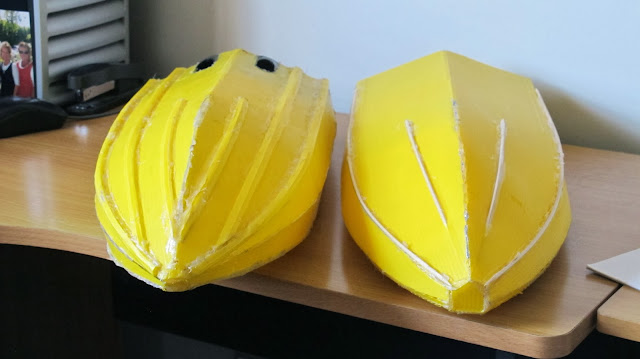
Yellow boat 1 and 2

Yellow Boat 3 

Yellow Boat 4 Balsa ply Epoxy Fiberglass tape


Read More..

Carrying A Dinghy On A Boat

My situation is a little unique.I am building a boat and a dinghy.Carrying one,however,has presented a challenge because of my boat build.Most boats use a davit system and carry the dinghy on the swim platform or transom.Some carry them on the roof.At first,I thought the roof would be a good place,but as pointed out to me on a forum post,its not.Carrying on the roof can make for a dangerous situation in rough water.Its hard to launch a dinghy while its swinging on a boom or crane.It could crash into the boat and break stuff.It could break loose and hit someone or sink.In an emergency,the boat could sink before getting the dinghy in the water, taking the dinghy down with it.

Most production boats have a lot of freeboard or height of the sides above the water.The boat I am building doesnt have much freeboard at the transom compared to production boats.Because of my boats lower freeboard than most, presents some major challenges for carrying a dinghy.I cant run a full width swim platform because my I/O comes through the transom right in the middle of it.This rules out swim platform dinghy lifts.A transom mount davit could possibly work,but it would be of my own design.Production davits wouldnt be able to lift the dinghy high enough to clear the water or I/O,at least none that I have seen.Then there is the issue of carrying the dinghy across the back.The dinghy will be longer than the boats beam is wide.This could cause problems when in tight marinas or narrow channels.Any of these options would severely limit my rear visibility, thus blocking my transom and preventing my boats name from being visible to other boats.I do plan to tow my dinghy, on the days I plan to use it,if the weather is good.

Some have suggested that I go with an inflatable or folding Porta boat.Ive had issues with inflatables in the past and they are heavy for their size.Some folding boats are a little to flimsy to really carry any weight.I need to be able to carry roughly 800 to 1000 pounds.I dont think its possible,so two trips to shore will be required.Maybe I could pull a ski tube behind the dinghy with our supplies in it.Wait,I know!Ill toss the kids in the ski tube and put our provisions in the boat.They will love that.

My hull draft will only be 16 to 18 inches,so I could possibly drop anchor and wade to shore.Im not sure how my significant other and our kids will like that.Got to keep Mama happy,LOL.When I am in a marina,I will more than likely moor the boat, while we go ashore for provisions.If the area will allow for it,I could beach the bow and let everyone off ,moor the boat,and take the dinghy back to meet the family.When we return,I could take the dinghy back to the boat,bring the boat back to shore,and load up.Seems like to much work.Some places will allow boats to temporarily dock for a quick trip to town for supplies.that would be the ultimate solution.

I still have a while to go before I make a final decision on how to carry a dinghy.Until then,I will be looking and watching other boats and how they carry a dinghy.Im always open to suggestions.


UPDATE!
After some discussion on the Trawler Forum,I am considering adding a rear rack to carry my dinghy and to hang the rear canvas enclosure from.I feel that this rack needs to be removable.I only plan to carry the dinghy when I do the Great Loop Cruise.Every where else I will be able to dock or trailer the boat out.Here is what I had in mind for those that are scratching their heads trying to figure out what I am rambling on about.


More info on the boats in the picture can be found at Allweather Boats.


Read More..

It is getting close! The Metal Boat Festival 2014!

We are a few weeks away from the 2014 Metal Boat Festival! You you have an interest in Metal Boats, I hope to see you there. 


Read More..

The need of keeping water out of the bilge of a metal boat

I always start my surveys on metal boats by using Thermal Imaging of the hull. This helps me locate the structural components of the metal boat. I am also looking for trapped moisture and/or water. If this is found, then there is a good chance there will be corrosion. Next I conduct an inspection of the bilge of the boat, including, anchor, sail, cockpit lockers, and lazarettes. Now I have a very good idea where to concentrate my UTM-audio gauge. I take readings of the whole hull, but will do more readings in the areas of concern.

When I see water in a bilge of a metal boat beyond what might be in a sump I get concerned. I would like to see dry bilges on all metal boats, but this is not always possible. On Tuesday I surveyed a steel trawler. Overall this boat looked to be in fair condition, but then I saw the water in the bilge, a lot of it! There was heavy scale in some areas because of the standing water.  I knew this was an area I needed to spend some time getting thickness readings.

The next day I did my audio gauge. My readings indicated plate wastage. In some areas I could not get a reading that most likely is caused by heavy scale. My visual inspection from inside confirmed the heavy scale. When I arrived at the boat I noticed some weeping from what I hoped was paint blisters. Then an hour later water stared streaming from one of the blisters. Just to think only the paint was holding this section of plate together.

The good news! The boat was out of the water it will not sink. Steel boats can fixed; by cropping out the bad plate and adding new. In a short period of time, she will be underway again.

The moral of this story? If you own a metal boat keep an eye on the bilges.

I will post photos in my next post.
Read More..

Yellow Boat 4 twin NQD jets driven by P2632 Brushless Outrunner 3800kv Brushless


Yellow Boat 4 


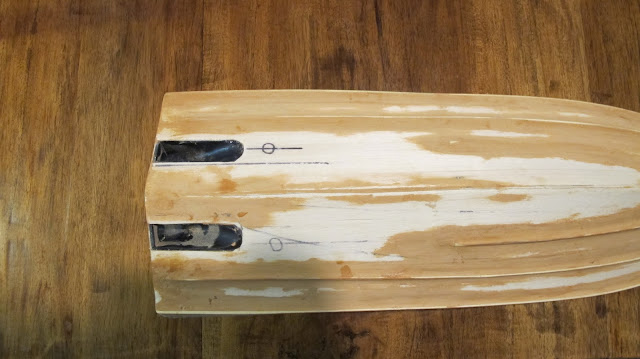
Twin NQD jets modified with brass stern tubes.

I have alternate nozzels which are a little larger than standard also.


Brass impellers made from cutdown brass props

Two P2632 Brushless Outrunner 3800kv Brushless


Stern Tubes brass shafts wrapped in PTFE tape until they fit the tubes. Will be setting up air cooling system with small EDF fan.

Will probably run two 2200mAh Lipos and 50 Amp aero ESCs with big heatsinks


For the cooling I may have the Arduino open and close a vent with a servo if the heatsinks get hot, as well as controlling the fan speed. 


Based on yellow boat plans different deck 390 Grams as shown 
Also Ply fiberglass epoxy catamaran build log

Glass and epoxy inside balsa ply, will epoxy the outside too. Its very strong with builders fiberglass tape and epoxy 


The motors will be mounted further forward on a cooled plate 


Spray rails are bamboo barbecue skewers and wood filler  


Read More..

Deciding On A Boat To Build

I finally narrowed down my boat search.I have been tormenting myself with buying or building.After doing the math,I have come to the conclusion that I can build a new boat cheaper and better than buying a used turn key boat.Most of the turn key boats I looked at really needed work.Fiberglass boats are the worst.Most have water logged flotation foam that causes the wood stringers and transom to rot from the bottom up.Ive stripped (and helped strip) and rebuilt a few boats.It is not fun in a big 25+ foot boat.Its faster and easier to start from scratch.

 Most of my boating will be on larger lakes and the ICW around South Carolina,North Carolina,and Georgia.I do plan to take the boat around the Great Loop,so it must be a sea worthy design.I searched for years for a design that was easy for a first time builder with some basic carpentry and boat building skills.There are a lot of excellent boat designers with plans out.Most are more suited to the advanced DIY builder than a first timer with basic skills.Out of all the producers of plans,I decided on Spira International.Jeff Spira is the designer of all the plans.The best thing about his plans,is access to Jeff Spira himself.He can be contacted through his website or on facebook.He always gets back in contact with you within time.He is a busy man tho.So please give him a few days,he could be away.

 My base criteria for a boat is as follows in this order.There are more variables,but these are the main ones.
1)Trailerable behind a full size pick up truck,van,or class C RV.
2)Shallow draft, 12 to 16 inches with the lower unit up.
3)Absolutely no more than 2 gallon per hour fuel burn at displacement speed.
4)Must have sleeping arrangements for four.
5)Must have full head with shower.

In my next post, "The Chosen One",I will review the Spira plans that I considered,a break down of build cost,and the plans I chose.

Honey,Lets get a boat.

Read More..

Spira International 27 Foot Boat Plans Build Costs

This will be my first keel up boat build.Well,unless you count the single person knock together boats I have built.I have rebuilt and restored a number of boats by myself and with friends.I even held a job doing interiors and upholstery in boats.

The one main factor is the cost of building the hull and cabin.I will layout the cost to build the 27 foot trailerable Spira International boats.I am using the bill of materials(BOM) off of the study plans that are available on the Spira International website.Its good to be able to get an idea of what costs are involved before building.Most other designers require you to purchase a study plan to get an idea of whats involved to build their design.You may still be required to buy the full plan set to get the BOM.This is a bad business practice in my mind.With the BOMs in hand,I started getting the numbers together and adding up cost.I will layout the cost break down and then give some ideas on how to cut some costs.I will start laying out things and end with the boat I have chosen as the design I plan to build.

The Elements of Boat Strength

Suppliers for pricing are as follow.
Lowes Wood supplies.
Home Depot Wood supplies.
Raka Epoxy and fiberglass.
Fastenal Screws and bolts.
McMaster Carr Screws and bolts.
DuckworksBBS Duckworks carries some of the odd size screws called for in the plans.

Avoid treated woods as much as possible.Treated wood usually contains traces of copper which corrodes fasteners and any other metals that come in contact with it.Even painted it can still leech copper.Also,copper is bad for the marine environment and is illegal to use in bottom coatings in some areas.

I prefer A/B fir plywood but will accept A/C fir,if its good quality.Avoid plywood with voids and footballs if possible.

I only use stainless steel fasteners for the extra corrosion resistance.Most of them will be sealed in with epoxy.I only use Raka epoxy kits with non blush hardener.

50 inch width is considered standard width for fiberglass boat cloth.Try to purchase all of your fiberglass cloth at one time.It saves a lot of money.

Bahaman Hull only No BOM for cabin.
$105=240 ft. 2x4
$40= 38 ft. 2x8
$60=2x stock for transom splash well
$78=180 ft. 1x4
$75=170 ft 1x4 decking-You can use decking or epoxy coated and painted 1x4 choice is yours.
$50=1x stock for rail cap-A good hardwood works well but is costs more.
$297=9 sheets 1/2 in. plywood
$195=5 sheets 3/4 in. plywood
$219=500 #10x3 in. screws
$196=2000 #8x2 in. screws
$338=5 gallons epoxy
$259=50 yards 6oz fiberglass cloth
_________________________
$1912=total

You can look at the cost of other models to gain and idea of the cost to build a cabin.I estimate between $300 and $500 depending on length of the cabin.

Chubasco
Hull Only
$264=8 sheets 1/2 in. plywood
$142=10 sheets 3/8 in. plywood
$103=240 ft. 1x4
$79=180 ft. 2x4
$341=1000 #10x2 1/2 in. screws
$30=250 #8x2 in. screws
$76=5/16x4 in. machine screws
$26=5/16 in. nuts
$9=5/16 in. washers
$60=12 ft. 5/16 in. threaded rod-washers and nuts included above price
$5=four 1/4 in.x 4 in. lag screws
$338=5 gallon epoxy
$25=3 in. glass tape 50 yards
$311=60 yards 6oz fiberglass cloth
_____________________________
$1809=total

Decking
$36=80 ft. 1x4
$99 =3 sheets 1/2 plywood
$25=250 #8x1 1/2 in. screws
$30=deck finish
_____________________________
$190=total

Cabin
$29=62 ft. 1x4
$58=2 sheets 5/8 in. plywood
$165=5 sheets 1/2 in. plywood
$25=250 #8x1 1/2 in. screws
$55=2 quarts epoxy
$46=8 yards 6oz fiberglass cloth
____________________________
$378 total

$2377 total hull,deck,and cabin

Cane River
Hull only-The cost for Chubascos cabin would be close.
$284=20 sheets 3/8 in. plywood
$462=14 sheets 1/2 in. plywood
$131=300 ft. 2x4
$47=240 ft. 1x3
$50=55 ft. 2x8
$341=1000 #10x2 1/2 in. screws
$188=100 5/16x4 in. screws
$26=100 5/16 in. nuts
$9=100 5/16 in. washers
$245=2500 #8x2 in. screws
$608=10 gallon epoxy
$622=120 yards 6oz fiberglass cloth
_______________________________
$3013 total

San Miguel
Hull only-The cost for Chubascos cabin would be close.
$142=10 sheets 3/8 in. plywood
$330=10 sheets 1/2 in. plywood
$172=6 sheets 5/8 in. plywood
$105=240 ft. 2x4
$55=280 ft. 1x3
$16=32 ft. 1x4
$171=500 #10x2 1/2 in. screws
$196=2000 #8x2 in. screws
$798=15 gallons epoxy
$518=100 yards 6oz fiberglass cloth
________________________________
$2503 total

Sitka
This is the boat I am planning to build.I will stretch it to 30 feet and build the V entry bow per the plans.
This total will be to build Sitka at 27 feet.Add approximately $200 to $300 to build to 30 feet with the V bow.
Hull Only
$105=240 ft. 2x4
$85=125 ft. 2x6
$30=32 ft. 2x8
$50=100 ft. 1x4
$199=14 sheets 3/8 in. plywood
$396=12 sheets 1/2 in. plwood
$113=6 sheets 5/8 in. plywood
$451=60 yards 6oz fiberglass cloth
$498=8 gallons epoxy
$97=300 #10x3 in. screws
$98=1200 #8x1 1/2 in. screws
$176=60 ft. 1x8
_______________________________
$2298 total

Cabin
$31=64 ft. 1x4
$141=48 ft. 1x8
$462=14 sheets 1/2 in. plywood
$XXX=12 yards 6oz fiberglass cloth-price included in bulk order above
$182=2 gallon epoxy
$25=200 #8x1 1/4 in. screws
______________________________
$841

$3139 total for hull and cabin

Newfie.Some may notice that I didnt include Newfie.I really like that boat, but it has a very small interior and there was no BOM on the study plans.

Boat Building Manual

There are some ways to cutting material costs.I added a few above.

Lumber.Find a local saw mill and have the lumber cut to full boat length.You could also use trees from your property.Make a deal to get your lumber ordered filled and let the mill have the rest to sell as payment.This can be tricky as some saw mills are mobile while others require you to haul your wood to the mill.This option takes longer and requires a place to store the wood while it finishes drying out.The best option for most people will be finding a local builders supply.They get huge loads of lumber with a volume discount.If you buy enough,they sometimes will negotiate for  lower price.Also,there wood tends to be better quality than most places like Lowes and Home Depot.

Fasteners.I recommend finding a local supplier and purchasing everything at once plus 10% to build the hull and/or cabin.Later when you need fasteners and hardware to finish out the boat,you can possibly negotiate for a slight discount on pricing.Hey,every little bit helps.

Epoxy.Some epoxy manufactures set a shelf life for their products some do not.I have had epoxy either, go bad, or it was a bad batch.Which,I am not sure.Epoxy is heavy and can get expensive.Try to buy in bulk to save on cost and shipping.Its best if you can find a dealer or supplier.Be careful tho.Their mark up may be a lot higher than ordering a kit.Shop around.I like Raka because they have an easy mixing system.

PL glues.I have had bad experiences with these, so I stay away from them.My main gripe is the ability for PL and epoxy to stick together.I built a knock together plywood boat and when I sheathed it in fiberglass and epoxy,the area around the PL let go.I wont knock PL glues, but theyre not for me when boat building.


My next installment will include more ways to cut cost during fit out and finishing.


Practical Encyclopedia of Boating


Read More..

Metal Boat Festival 2014 Program

The Metal Boat Festival: The board members have been busy planning this years Metal Boat Festival. We have a good line up of speakers for this year. Below is the program. If interesting in attending visit: http://www.metalboatsociety.com/festivalInfo.htm

If interested in metal boats, this is the place to be. And I can not think of a better place to be in August than Annacortes, Washington, the home of the Metal Boat Fest. A scenic ferry ride will take you to the San Juan Islands, if you are coming to the Fest plan on a trip to the San Juan Islands you will not be disappointed.

Thursday Aug 7, 2014 afternoon Cap Sante Marina
Boats check in with Dockmaster Lance Ekhart – 360-305-5345
3pm – 6pm Set up at the Seafarer’s Memorial Park Building, Anacortes
Come and help us set up for the Festival. Pre-registration is also
available at this time.

Friday Aug 8
Seafarer’s Memorial Park Building

0730 -0800
Sign in and register.
Start the day with tea, coffee, muffins, fruit provided by our breakfast
sponsor – Swiftsure Yachts

8am – 1015 Opening remarks and welcome by MBS President Rod Palanca.
Member introductions – introduce yourself and tell us about your
project. Plenty of time for all to share.

10:30 -
12:00 a.m.
David
Bernhard
-San Diego Rigging.

Dock lines & more
Beginning with dock lines, I am planning on
touching about many aspects of standing and
running rigging. Pros and cons of the different materials and way of
doing things. Though dock lines, tow and anchor bridals, will pretty
much take care of the power boaters. Sailors will be interested in the
entire talk.

12:00 -
1:00 p.m.
Break for lunch
Check out speaker and commercial member displays.
There are a multitude of local restaurants nearby for lunch.

1:00 - 2:00
p.m.
Arthur Barlow Campbell, CPCU, ARM, AMIM

Practical Ideas on Buying Yacht Insurance
Learn about how to insure your metal boat, and
possibly save some money is the process.
• What are some of the pitfalls in insuring your metal boat?
• How to select an agent/broker to insure your metal boat?
• What should I expect from the marine insurance underwriters?
• Will I need a survey on my metal boat, and if so, how to select
a marine surveyor.
• Learn more about obtaining insurance for your metal boat, and
be better prepared if you have a claim.

Art is a graduate of Florida State University (B.S.) with a major in
Insurance and Risk Management. He later earned the following
professional insurance designations, Chartered Property and
Casualty Underwriter (CPCU), Associate in Risk Management (ARM),
and Associate in Marine Insurance Management (AMIM), Art is an
independent agent/broker with Gulfstream Insurance Group, Inc. in
Ft. Lauderdale, FL. He spent 20 years with Liberty Mutual in the
commercial sales department serving as an Account Representative
and later as a Resident Manager. Art has served as an expert witness
and litigation consultant in marine insurance.
He is past president of the Gold Coast CPCU Society as well as the
past president of the Fort Lauderdale Mariners Club. Art is an
approved instructor by the Florida Department of Financial Services
for Inland Marine and Marine Insurance. He taught Marine Insurance
as an adjunct instructor at Broward Community College.
Art has been a speaker at the Metal Boat Society Festival, and Fort
Lauderdale Mariners Club Marine Insurance Seminar. As a member
of the USAF he served as a loadmaster and retired with the rank of
CMSgt. Art owns an Alan Pape designed steel cutter. He has helped
in the delivery of sailboats from the Chesapeake, Bahamas and the
British Virgin Islands.

2.15 – 3.00 Rod Palanca
Boat builder/owner
Simple water systems and water makers

3.15 - 4:30
p.m.
Gary Wellman

1.THRIVE Freezed Dried Foods
2. Air Vent Dryers
3.Space Dryer dehumidifiers
I have been associated with H2Out for the past 1 1/2 years working
with sales and marketing. My background is 25 years in the sales
field.
We will provide food samples for those who are interested in freeze
dried foods which are lighter than canned foods with no
preservatives, require no cutting, peeling, can be prepared in less
than 15 minutes and are perfect for on-board use.

Rich Pindell

“When Good Fuels Go Bad".
This talk contains information about how fuels have changed over the
last 10 years and what we can do to prevent fuel contamination with
the new bio blends on the market.
Rich Pindell of Pindell Engineering, Inc., port Townsend, WA received
the 2012 coveted Pittman Innovation Award for leadership in
developing reusable products for water absorption. His H2Out
Systems prevents mold, mildew, rust, and corrosion damage in fuels,
hydraulic fluids, and interior spaces.


Free time to meet with Speakers and visit our Commercial members
Booths

7 pm
Friday Night - Potluck Dinner at the venue,
Share dinner and swap boat project ideas.
Outdoor concert in the park

August 9th - Saturday

8:00 a.m. Eye Opener – Coffee, tea, cocoa, muffins, and fruits, to start the day,
from our sponsor Swiftsure Yachts

9:00 -
10:15 a.m.
Alison Mazon –
Accredited Marine Surveyor®,
Portland, OR

The Hidden Costs of:
• Messing with a naval architects design
• Non-standard design
• Ignoring ABYC standards

Alison Mazon is a full service marine surveyor, who began surveying
in 1999, and was accredited in 2002, SAMS ® Yacht & Small Craft.
Alison was the VP of testing with SAMS ® from 2008 – 2013.

10:30 -12:00 a.m.
John Simpson – Boat Designer

Topic - Boat Stability
John Simpson has been involved with boats since childhood and this
evolved into a successful career in naval architecture and boat
design. This path has been the long but thorough route – 4 years of
shipyard & technical training, several years of working with other
naval architectures, 3 years with a boat builder doing purchasing,
estimating, mould tooling, outfitting, engine installation, sea trials and
even some design work.

In 1978 John opened his own design office and over the following
years has done over 100 designs for power, sail, pleasure,
commercial and military vessels in a variety of materials for both
domestic and foreign clients. In 1980 he won the Cruising world
magazine’s Design Award for his 42’ cutter ‘Fidelity’. This was a
forerunner of ‘Perelanda” a 43’ round bilge steel sailboat as featured
in the book Steel Away and owned/built by authors LeCain Smith and
Sheila Moir, 2 of the founders of the Metal Boat Society. John was the
2010 Metal Boat Festival’s Designer of the Year and has been a
stalwart supporter of the MBS for many years.

12:00 -
1:00 p.m.
Break for lunch
Check out speaker and commercial member displays

1:00 - 2:15
p.m.
Peter McGonagle – Swiftsure Yachts, Inc

"A profile of two metal boat builders"
Allures/Garcia(aluminum-Europe) and
Waterline Yachts(Steel-Canada). I have
a good supply of photos from both yards of
construction. This is an opportunity for members
to see what a professional yard looks like.

Peter McGonagle grew up sailing in Rhode Island, but has lived and
worked in Seattle, Washington for the last ten years. In 2002 he
started Swiftsure Yachts with two partners. He is a Certified
Professional Yacht Broker and am a licensed Florida yacht broker. He
and his family moved aboard the S/V Charlotte in August of 2007 to
explore the cruising life for a few years, and in July of 2009 I
completed a two year Caribbean cruise with my family aboard
“Charlotte,” a 1991 Robert Perry-designed 51? steel sloop. We’re now
back in Seattle .

2:30 - 4:00
p.m.
Dylan Bailey - Marine Surveyor
Proper Paint Systems For Metal Boats:
From new construction to maintaining an
older boat. Topics to include paint systems,
proper mileage, application techniques and
maintenance.

Dylan grew up in the metal boat building business as the son of
legendary metal boat builder Howdy Bailey. After working on metal
boats for his father he worked for other builders learning about boat
building in wood and fiberglass. He also expanded his knowledge
learning to install and maintain mechanical and electrical systems. In
1991 he started his own Marine Maintenance business and gained
extensive experience refinishing and maintaining boats. During this
time he completed additional off-hour training and has become an
Marine Surveyor which is his current profession.

5-7pm The Boat Walk At the Cap Sante Docks (floating)
and Marina Parking Lot (trailered)

7 pm
Saturday Night Barbecue Dinner at the Floating Party Dock at Cap
Sante Marina
Sponsored by Howdy Bailey Yacht Services

8:30pm
Sunset sail – the chance to be out on a Metal Boat

August 10th - Sunday
8:30 a.m. Coffee tea, cocoa etc...

9:00 -
10:00 a.m.
Metal Boat Society Annual Business Meeting and election of MBS
Officers

10:00 -
12:00 a.m.
Boat Builders Forum
This annual information-packed wrap-up event will include open
discussion of design and construction issues with the professional
panel, so bring your questions.
This years’ panel will include Pete Silva (Iota Metals), John Simpson
(Designer), and Dylan Bailey (Marine Surveyor).

NOONISH FESTIVAL CLOSES!


Read More..

Mad Man Yellow Boat 2 X Turnigy Heli motors 700 Watts 1850 Grams of thrust measured at 78 Amps

Mad Man Yellow Boat 2 X Turnigy Heli motors > 700 Watts 1850 Grams of thrust measured at 78 Amps


Turnigy Heli series outrunner motors are an excellent upgrade for your helicopter. Built with high quality components, tight windings and genuine NMB ball bearings, these motors provide excellent performance and efficiency at a price that cant be beat! 

Specs:
Operating Voltage: 7.4~14.8V (2~4S lipoly)
RPM: 3800kv
Max Current: 35A
Max Power: 365W
Idle Current: 3.5A
Resistance: 0.018ohms
Shaft: 3.175mm


3mm flex shafts 3 blade impellers cutdown props 45mm pitch

Read More..

A Rudderless Boat

During sea days my request for a time on the bridge was answered with printed invitations both to the Bridge and to the Engine Control Room. Fifteen years ago, such tours were offered to all passengers and announced like to the shows or bingo. But now, maybe due to terrorism, only those who request same are invited and one must bring ones room key and a photo ID. And only about 25 of the 2300 passengers came.

Most if not all of the officers of both the mechanical and navigation staffs have Greek surnames and were educated in Greek maritime colleges. They are quite fluent in English and pleasant and polite, but they speak with strong Greek accents. My father spoke with a German accent so I am used to such, but with advancing age and consequent hearing loss it becomes more difficult for me to understand accents.

The primary source of power for the ship and its huge propellers are gas turbines which generate electricity. The heat generated by the gas is trapped and used to make steam used to create even more electricity. Everything is duplicated so that the energy from either of two engine rooms, each containing two engines can be directed via electrical cables (rather than huge propeller shafts) to either of the two propellers or to both. So if either part of the power system fails, its sister can still power the ship-- to 17 knots but not to the max speed of 25. If an engine fails, the restart procedure takes only two minutes -- a tiny fraction of the time it took to restart Hammerburgs steam boilers!

Constellation also has two huge reverse osmosis water making machines to supply the food, drinking and washing needs of its huge complement of passengers and crew.

All waste water from the engines, from showers, sinks and laundry and from the ships heads is piped to a central tank and treated by microbes and UV light before being discharged -- as clean enough to drink!  A bit stronger and more successful sewage treatment than ILENEs former Lectrasan machines. The alternative is to keep this water in holding tanks and pump it out in port but this alternative comes with a big sewage fee.

No rudder!!!  Yes, because the huge propellers can be rotated on a vertical shaft -- like the out board motor on a dinghy!  These propellers do not have a reverse gear. To achieve reverse, you turn the propellers around. They spin in the same direction as before, but now instead of pushing the boat forward their pushing power is directed to pull it aft. And no need for stern thrusters, like the three eight foot diameter ones in the bow; just rotate the ships propellers to thrust to the side. The boat also has two large (retractable so that she can pull up to a dock in port) stabilizer fins that stick out about 22 feet on each side to reduce rolling.

The bridge is forward on the ninth deck, below the gym and the cocktail lounge on decks ten and eleven. It is enclosed and extends several feet outboard from both the sides of the ship giving the officer in command visibility of the sides of the ship from stem to stern. 


I asked whether they controlled degree if heel in turns like the sharp ones in the island archipelago on the way to and from Stockholm and the Lieutenant did not really give an answer. Ilenes arms are folded.
On port wing of bridge
Similarly, as to why they went clockwise three quarters of the way around the large island on which Copenhagen is situated, rather than the shorter route one quarter of the way around that island, counterclockwise from the south to the east, and again the answer made no sense, referring to a number of factors that can affect such decisions. But the chart posted near the shore cruise office on deck three shows only our route, the long way.

The Captain also gave a talk in the theater
Part of theater, sorry about fuzzy shot.
about the construction of such boats (modular -- like the huge military vessels we saw being built in Bath ME) and navigation.

He is an extremely witty and charming man and answered all questions. The short answer is that there is a bridge between Denmark and Sweden under which Constellation cannot pass, necessitating the long route. She has a 45 degree righting angle despite only 25 feet of draft and an eleven story freeboard, but he never exceeds five degrees of heeling and despite sharp turns --sharp for a boat this size -- in the archipelago of islands outside Stockholm, we did not exceed three.
Tight turns

One passenger asked if he could bring his family along: "I could but I dont have one." How about a girlfiend? "I could but I dont have one." How about a boyfriend? "I could, but I dont want one."


They told me that Maine looks a lot like Sweden. I took it on faith. Now this picture shows that Sweden looks a lot like Maine.

Our cabin, looking inboard; next is outboard.


Faux teak deck

Part of the gym


Part of the pool

Read More..

Yellow boat 4 Arduino code with HK TR6 A V2 RX PPM interface


Im lowering the top BTW

The build here


The engineering in the boat the cooling fan circulates air blowing it out between the motors. This wee fan moves lots of air on 7.4 Volts


Arduino Inputs from RX

Ch3   Throttle                       Arduino pin 4
Ch1   Steering                       Arduino pin 5
Ch5   Throttle limit                Arduino pin 6
Ch2   Steering on Throttle       Arduino pin 7

Arduino analogue inputs

Anin 0  Ambient temp sensor                      Anin 1  Hall effect current sensor

Arduino outputs

Pin 8    Left jet
Pin 9    Right jet
Pin 10  Cooling fan speed
Pin 11  Steering

Mixing of the outputs

    
  //SteeringBias
  
  int SterringOnThrottle = (long)map((int)ch4v, 1500, 1100, 0, 1000); 
  
  if(SterringOnThrottle < 0) SterringOnThrottle = 0;
  
  SteeringBias = (long)map((int)ch3v - (int)ch3vWOZ, 0, 1000, 0, SterringOnThrottle); 
    
  int SteeringAngle = (long)map((int)ch3v, 1100, 1900, 1000, 2000);
  
  //Limit fan speed for 11.1 V
  FanSpeed = map(FanSpeed, 1100, 1900, 1000, 1500);
  
  //Update the outputs
   
  Servo1.writeMicroseconds((int)Throttle - (int)SteeringBias);
  
  Servo2.writeMicroseconds((int)Throttle + (int)SteeringBias);
     
  Servo3.writeMicroseconds((int)FanSpeed);
   
  Servo4.writeMicroseconds((int)SteeringAngle);


The cooling system


The fan is a 27 mm EDF should keep the air moving with a 10A ESC


There is a big heatsink and fan on the 30 AMp ESCs


Read More..


Powered by Blogger.